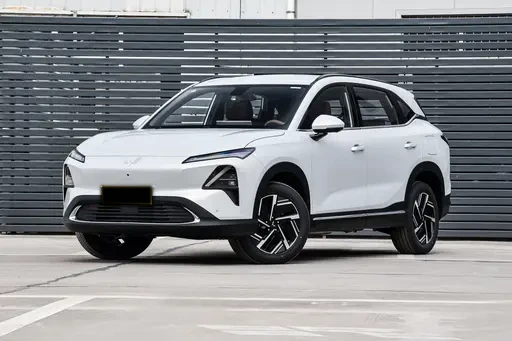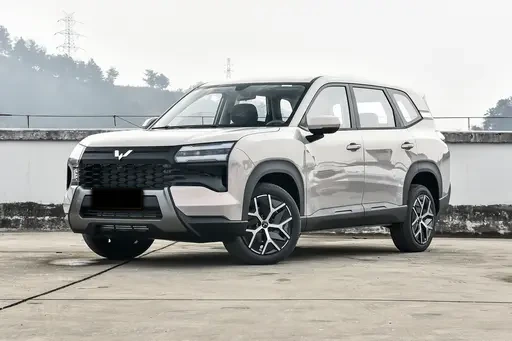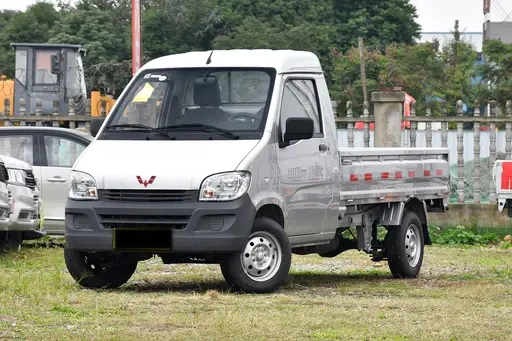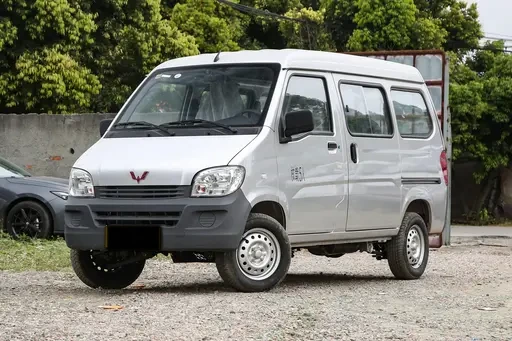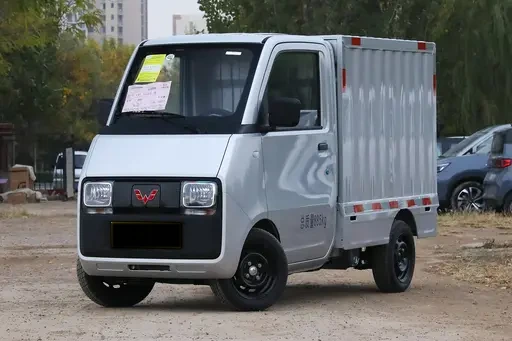
Wuling Export Supply
LHD
Condition
New
Model Year
2023
Mileage
0 km
Steering
LHD
Seats
1
Fuel Type
Electric
Drive Type
RWD
Range
115km

China-source Wuling vehicle supply for overseas dealers, importers and fleet buyers, with export-side coordination and exact vehicle confirmation before shipment.
A center driving position, single-seat cabin and side-access cargo box make the 2023 Wuling E10 a specialized EV for narrow last-mile delivery routes.
The 2023 Wuling E10 is not a reduced passenger van. It is a single-seat electric cargo vehicle designed for parcel routes, closed compounds, markets and dense urban streets where a conventional van is wider than the work requires. Its 1,080 mm body width, central driving position and 4.3 m turning radius define its value more clearly than its compact exterior length.
Behind the cabin is a fixed 1.7 m3 cargo box with side and rear access. The vehicle is rated around a 200 kg cargo task, uses a 20 kW rear motor and carries a 9 kWh LFP battery. The 115 km CLTC figure is the appropriate standardized range reference; the separate 150 km claim applies to a controlled urban condition at approximately 40 km/h and should not be presented as normal mixed-route range.
Buyers needing larger payloads should review the broader Wuling vehicles for export from China rather than choosing the E10 by cargo-box appearance alone. SGMW also lists the E10 in its official Wuling vehicle guide.
| Specification | 2023 E10 Utility | 2023 E10 Comfort |
|---|---|---|
| Vehicle layout | Single-seat electric cargo van | Single-seat electric cargo van |
| Steering / seats | Center steering / 1 seat | Center steering / 1 seat |
| Dimensions (L x W x H) | 3,310 x 1,080 x 1,690 mm | 3,310 x 1,080 x 1,690 mm |
| Wheelbase / turning radius | 2,200 mm / 4.3 m | 2,200 mm / 4.3 m |
| Cargo box size | 1,625 x 1,000 x 1,040 mm | 1,625 x 1,000 x 1,040 mm |
| Cargo volume | 1.7 m3 | 1.7 m3 |
| Marketed cargo payload | 200 kg | 200 kg |
| Curb / gross mass | 605 / 885 kg | 620 / 885 kg |
| Electric motor | 20 kW / 85 N-m | 20 kW / 85 N-m |
| Drive / transmission | Rear-wheel drive / single-speed | Rear-wheel drive / single-speed |
| Battery | 9 kWh LFP | 9 kWh LFP |
| CLTC electric range | 115 km | 115 km |
| 40 km/h urban-condition range | Up to 150 km | Up to 150 km |
| Top speed | 71 km/h | 71 km/h |
| Charging supply | AC charger or 220V / 10A socket | AC charger or 220V / 10A socket |
| DC fast charging | Not listed | Not listed |
| Suspension | MacPherson front / solid rear axle | MacPherson front / solid rear axle |
| Tires / brakes | 135/70 R12 / front disc, rear drum | 135/70 R12 / front disc, rear drum |
| Standard safety | ABS, EBD, hill-start assist, driver airbag, TPMS | ABS, EBD, hill-start assist, driver airbag, TPMS |
| Air conditioning / rear radar | Not fitted / not fitted | Manual A/C / rear parking radar |
China-market specifications may vary by production batch. The 150 km statement is tied to a 40 km/h urban test condition and is not interchangeable with the 115 km CLTC rating. Confirm the vehicle nameplate, charging equipment, cargo-body build and homologation documents before quotation.
A buyer should choose the E10 because the route is constrained, not simply because the vehicle is inexpensive or electric. Its narrow body can reduce wasted space in alleys, warehouse lanes, gated compounds and curbside loading areas. The 4.3 m turning radius also helps drivers reverse less often during repeated stops.
That advantage does not turn the E10 into a highway van. A 71 km/h maximum speed, 12-inch tires and a compact chassis place it in low-speed urban work. Route approval should consider traffic speed, road surface, drainage channels, crosswinds and the distance between charging points.
The 1.7 m3 box works best for parcels, flowers, packaged food, tools, light retail stock and similar low-density loads. The side opening is useful when rear access is blocked, while the rear doors support normal loading from a store or depot.
The 200 kg cargo figure is the harder limit. Batteries, bottled drinks, construction materials and other dense goods can reach that limit before the box is full. Export buyers should calculate the weight of a normal route basket instead of judging suitability from cubic capacity alone.
Utility and Comfort versions share the same battery, motor, cargo box and nominal range. The meaningful Comfort upgrades are manual air conditioning and rear parking radar. In hot export markets, air conditioning affects driver endurance and may justify the higher specification even though it can also reduce practical electric range.
Rear radar has practical value because the cargo body blocks a direct rearward view. The Utility version is most defensible for short, controlled routes where cabin cooling is not essential and reversing space is supervised.
The central seat can give the driver similar curb visibility on either side, but it does not automatically make the E10 legal in both left-hand-traffic and right-hand-traffic countries. Registration authorities may classify a single-seat center-drive cargo vehicle differently from a normal van.
Before payment, confirm whether the destination accepts the steering layout, single-seat cabin, lighting pattern, glazing, mirrors, speed capability and Chinese vehicle documents. Do not advertise the E10 as "RHD available" or "LHD available" unless a separate approved configuration is documented.
The E10 supports an AC charging point or a 220V/10A household-type supply in its home market. DC fast charging is not listed, so an operator should plan charging during the vehicle's normal idle period rather than expect a rapid midday refill.
Real delivery range changes with payload, repeated acceleration, temperature, air-conditioning use, gradients and battery condition. A practical route plan needs reserve distance for detours and battery aging. The included charging cable, connector, voltage and earthing requirements must also be confirmed for the destination.
No. It is a one-seat commercial cargo vehicle intended for light urban delivery. It does not provide a passenger seat or a rear passenger compartment.
Neither description is exact for the standard vehicle because the driver sits centrally. Destination approval must still be checked; center steering does not create automatic acceptance in every traffic system.
Both share the same cargo box and electric system. The Comfort version adds manual air conditioning and rear parking radar, making it more suitable for hot climates and unsupervised reversing.
The standardized CLTC figure is 115 km. The higher 150 km statement refers to an urban operating condition at about 40 km/h. Actual route range depends on load, temperature, speed, gradients and accessory use.
No. The figure is 1.7 cubic metres of cargo volume, not cargo mass. The marketed cargo payload is approximately 200 kg.
DC fast charging is not listed for the standard 2023 vehicle. Its operating plan should be based on AC charging during off-duty hours.
It is primarily a low-speed urban logistics vehicle with a listed top speed of 71 km/h. Highway eligibility and safe route suitability must be checked under local rules.