Wuling Export Supply
LHD
Condition
New
Model Year
2026
Mileage
0 km
Steering
LHD
Seats
5
Fuel Type
Electric
Drive Type
FWD
Range
301 km / 401 km / 501 km CLTC
China-source Wuling vehicle supply for overseas dealers, importers and fleet buyers, with export-side coordination and exact vehicle confirmation before shipment.
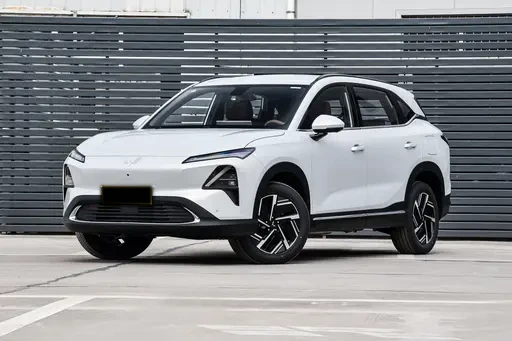
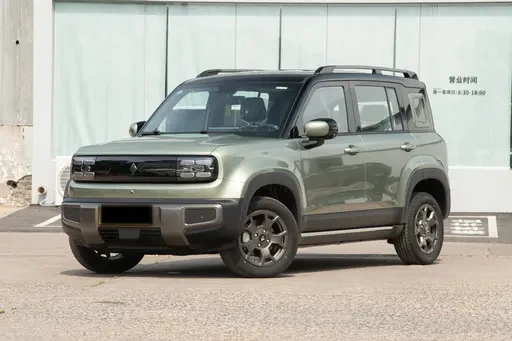
The 2026 Baojun Yep Plus is a five-seat compact electric SUV with 301km, 401km and 501km CLTC versions, a 75 kW front motor, 3.3 kW external power and up to 1715 L of expanded cargo space.
The 2026 Baojun Yep Plus is a five-door, five-seat compact electric SUV offered in 301 km, 401 km and 501 km CLTC versions. Every version uses the same 75 kW front motor, 180 N-m output and 150 km/h maximum speed, so the range upgrade does not create a faster vehicle.
The important buying differences sit deeper in the specification. The 501 km versions combine the 54 kWh battery with liquid cooling and a shorter official DC fast-charge time. The 501 km Smart Premium then adds the full driver-assistance, parking-assistance and active-safety package. Overseas buyers should therefore choose by climate, charging pattern and software usability rather than by range alone.
The comparison covers the four current 2026 China-market versions. Confirm the exact trim, battery pack, charging connector, software status and VIN evidence before export quotation or shipment.
A buyer comparing only the 301 km, 401 km and 501 km labels can miss the most important technical change. The official specification lists battery heating and intelligent insulation across the range, but liquid cooling only for the two 501 km versions. That matters when the vehicle will operate in a hot climate, complete longer daily routes or use DC charging repeatedly.
Early owner discussions about the previous 401 km version include reasonable questions about repeated fast-charge performance after highway driving. A single owner report does not establish a universal fault, but it highlights why thermal-management hardware should be part of the buying decision. For high-temperature African markets or intercity use, the 501 km version may offer more operational value than its extra 100 km of rated range suggests.
The 301 km version remains useful where trips are short, charging happens overnight and entry cost controls the purchase. The 401 km version is the middle route for mixed city and weekend driving. The 501 km versions suit buyers who need a larger reserve, faster 30%-80% charging and liquid-cooled battery management. Actual range will still change with speed, cabin cooling, road gradient, payload and temperature.
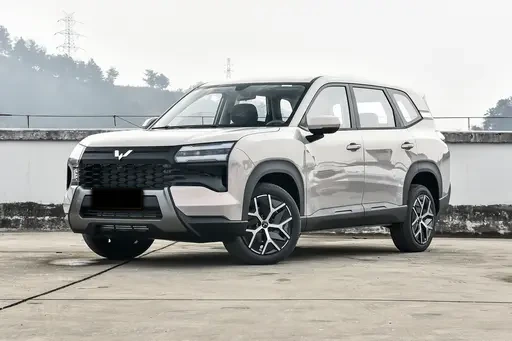
The square body, roof rails and upright styling create an off-road look, but every current 2026 Yep Plus is front-wheel drive. There is no four-wheel-drive system, low-range transfer case or official claim that turns it into a serious off-road vehicle. The realistic strengths are compact external dimensions, a high seating position, useful visibility and five-door access.
Its 75 kW motor and 180 N-m output are suitable for urban roads and normal highway travel, but a buyer should test steep gradients with passengers and luggage before placing a fleet order. Owner discussions also mention firmer reactions over speed bumps and more wind or tire noise at higher speeds. The 2026 model adds double-layer front glass and additional acoustic treatment, but the upright body cannot remove every aerodynamic limitation.
The side-opening rear door is part of the Yep Plus identity and can be convenient where overhead clearance is limited. It also needs open space behind and beside the vehicle, so it should be tested against narrow parking bays, walls and roadside loading conditions in the destination market. Dealers should demonstrate the door movement instead of presenting it as an ordinary liftgate.
Inside, the 60/40 rear seatbacks let buyers balance passenger and luggage capacity. Official launch information gives up to 1715 L of expanded cargo volume and 28 storage locations. That makes the vehicle more practical than its short 3996 mm body suggests, but it remains a five-seat passenger SUV. Folding the rear seats does not create a commercial-van homologation or a certified payload claim.
All 2026 versions receive the 12.8-inch central screen, online functions, app control and China-market connected services. The 501 km Smart Premium adds navigation-assisted driving, memory-route assistance, intelligent lane changing, automated parking and active-safety functions. These features increase the domestic specification, but they should not automatically be valued as fully functional export equipment.
Before choosing the Smart Premium for an overseas buyer, verify account registration, SIM connectivity, map coverage, language, mobile-app access, OTA service and regional restrictions. Camera-based parking assistance may remain useful, while cloud navigation or route-memory functions may depend on services designed for China. Driver assistance must also remain supervised and cannot replace local road-law compliance.
All four versions support 6.6 kW AC charging, DC fast charging and 3.3 kW external power output. Those specifications are useful only when the vehicle connector, local charging protocol, grid voltage, earthing and cable plan work together. A China-market charging gun or discharge accessory should not be assumed to match every overseas socket or public charger.
For daily charging, the official 20%-100% AC times are 4.5 hours for 301 km, 6 hours for 401 km and 7.5 hours for 501 km. The vehicle should be matched to the depot's available power rather than advertised only by battery size. External power can support camping equipment or small appliances, but total output, plug form and continuous load must be checked before use.
Buyers comparing compact electric SUVs can review the Wuling and Baojun electric vehicle range and the available Wuling SUV routes. Current China-market specifications are published on the official Baojun Yep Plus page.
The 501 km versions deserve priority because the official specification lists liquid battery cooling for them. Route length, charging frequency, local temperatures and budget should still be reviewed together.
No. The current 2026 China-market versions are front-wheel drive. The boxy design and roof rails do not provide a four-wheel-drive system or off-road homologation.
Not necessarily. Map data, app accounts, mobile connectivity, online services and regional activation can affect availability. Overseas operation should be tested on the exact vehicle before those functions are promised to a buyer.
Yes. The official 2026 specification lists 220V external power output across all four versions, with launch information stating up to 3.3 kW. Destination plug compatibility and appliance load still need verification.
The published China-market range is left-hand drive. Right-hand-drive availability should not be advertised unless a specific factory-supported or market-approved configuration is documented.