Updated: September 2026
Wuling Vehicles for Africa: Practical Mobility Behind the Growing Attention
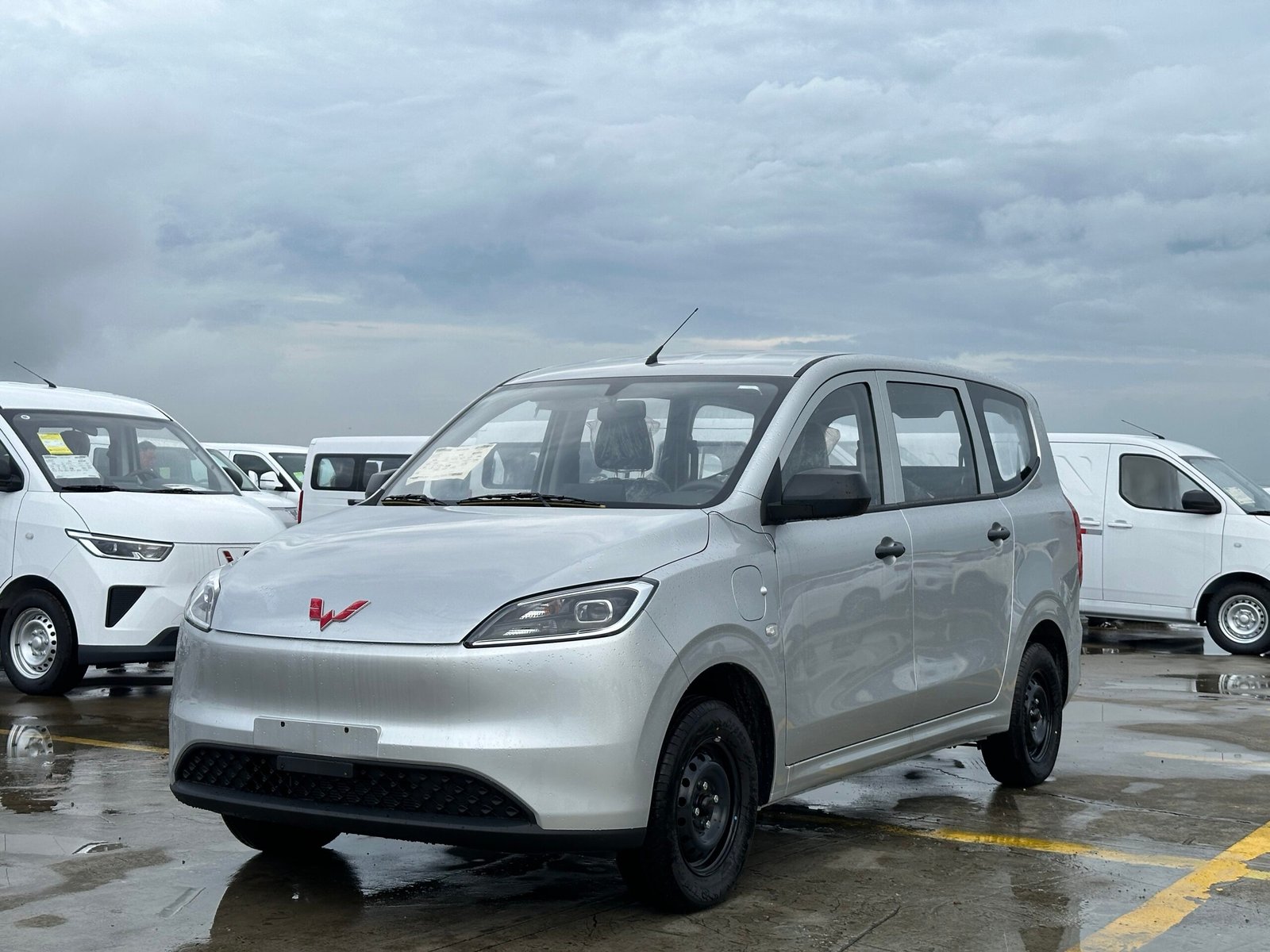
Wuling vehicles for Africa should not be explained as a simple low-price boom. The stronger story is more practical: many African buyers need vehicles that can move people, goods and small businesses every day, and Wuling’s product logic fits that conversation better than a prestige-first car pitch.
SAIC-GM-Wuling, or SGMW, is the company behind the Wuling brand. Public SGMW and Wuling information supports three points that matter for African buyers: the company has scale, Wuling has a broad practical product range, and overseas expansion is already part of the brand story. What public sources do not provide is a reliable Africa-only Wuling export total. That distinction should stay clear.
For African dealers, fleet buyers and small business users, the real question is not “is Wuling popular everywhere?” The better question is: does this exact Wuling model, steering side, powertrain and export version fit the destination market before a deposit is paid?
Buyer takeaway:
- Wuling’s Africa relevance comes from practical mobility: vans, MPVs, mini trucks, compact passenger cars, gasoline models, hybrids and EVs.
- Africa is not one market. LHD/RHD, charging access, road use, registration and service support must be checked by destination.
- SGMW global export momentum is useful evidence, but it should not be presented as Wuling Africa sales data.
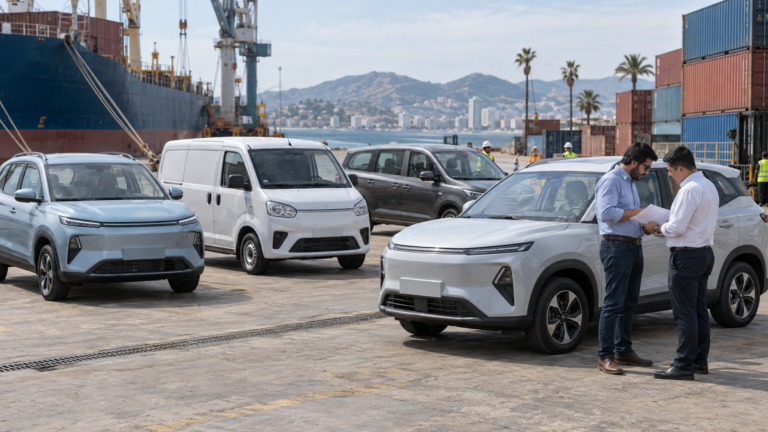
HZFK’s role: HZFK provides China-side Wuling sourcing and export coordination. Support can include checking current model availability, confirming steering side and powertrain, collecting VIN/nameplate and PDI evidence, checking mileage and vehicle status, confirming charging cables or agreed accessories, coordinating suppliers, preparing available China-side export documents, and supporting FOB or CIF quotations and handoff where available. Destination customs, tax, homologation, registration, road-use eligibility, local warranty, local repair and local spare-parts support must be confirmed by the buyer’s local partners.
Wuling’s Africa Story Starts With Work, Not Hype
Many vehicle brands start with image. Wuling is easier to understand through work. A buyer may be a small shop owner, a delivery operator, a hotel shuttle buyer, a taxi fleet, a local dealer testing affordable stock, or a family that also uses one vehicle for business.
This is close to Wuling’s own product philosophy: build around what ordinary users actually need. For African buyers, that idea matters because many purchases are not lifestyle purchases. They are working-vehicle decisions.
That is why Wuling should not be introduced only as an EV brand or a cheap-car brand. Its stronger fit is practical movement: carrying people, carrying goods, keeping ownership cost understandable, and giving dealers a product story customers can understand quickly.
Chinese Brands Have Earned a Second Look
Chinese vehicle brands are becoming more visible in African markets. Reuters reported that Chinese automakers expanded their share of South Africa’s passenger-car market from 11.2% in 2024 to 16.8% in 2025, supported by competitive pricing, technology-rich SUVs and longer warranties from local networks.
This is broader Chinese-brand evidence, not Wuling-specific Africa sales data. It should be used carefully. The point is not that every Chinese model works in every African country. The point is that buyers are now more willing to compare Chinese vehicles when the product solves a real cost, space or mobility problem.
For Wuling, that opens a practical lane. A buyer does not need another premium image story. They need the right vehicle category, the right steering side, the right powertrain and a realistic support plan.
Official Scale Helps, But It Is Not Africa-Specific Sales Proof
SGMW’s scale is useful background. Xinhua reported that SGMW sold 1,635,066 vehicles in 2025, including 1,000,066 new energy vehicles. It also reported 266,868 overseas exports in 2025, with 94,686 new energy exports, and cumulative production and sales above 31 million vehicles by the end of 2025.
Those figures help show that SGMW is not a small exporter experimenting with one model. They also support the idea that Wuling has experience across gasoline, commercial and electrified product routes.
But they should not be overstated. SGMW global exports are not Wuling Africa exports. SAIC group exports are not SGMW exports. A reported Nigeria fleet signal is not continent-wide Wuling sales. This article uses those numbers only to support brand scale and export capability, not to claim an Africa-wide Wuling boom.
Concrete Wuling Models Make the Practical Story Easier to See
Talking only about “vans, mini trucks and MPVs” can feel too abstract. Wuling’s public product pages make the practical logic clearer.
| Wuling category | Public Wuling examples | Possible African use case | Must verify before order |
|---|---|---|---|
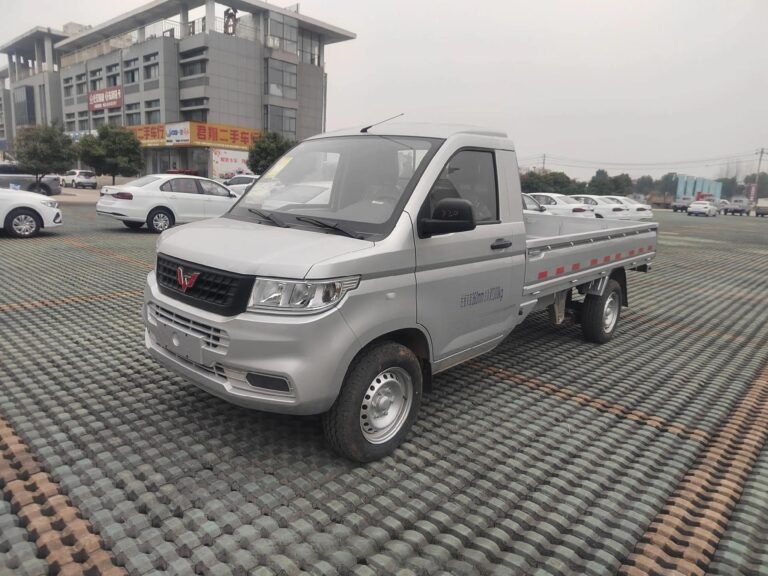
| Mini trucks and pickups | Rongguang New Pickup, Rongguang Pickup | Small-shop delivery, market supply, tradespeople and light cargo work. | Payload, steering side, emissions, road eligibility, spare tire and parts plan. |
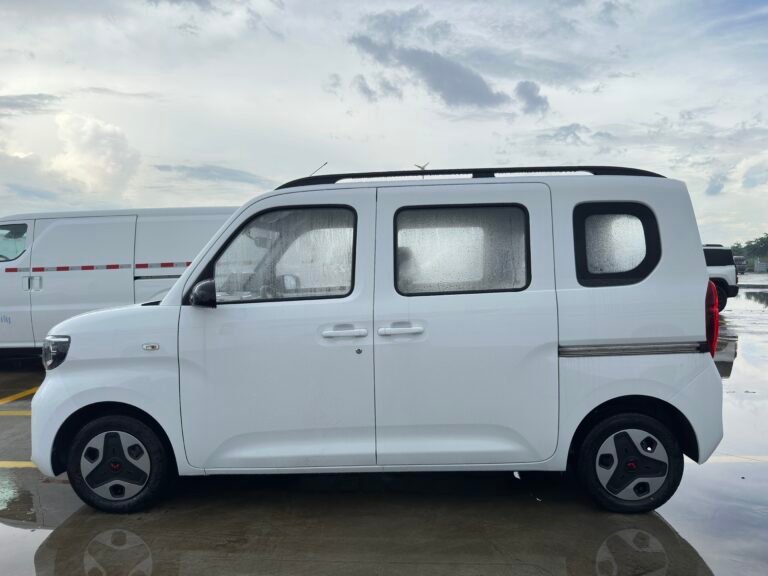
| Cargo and passenger vans | Hongguang V, Wuling Sunshine, Rongguang | Delivery, shuttle service, staff movement and mixed passenger/cargo use. | Seat count, body configuration, local classification and destination service support. |
| MPVs and family-business vehicles | Hongguang S, Jiachen and selected Silver Badge passenger products | Taxi, hotel transfer, airport shuttle, family transport and small business use. | Cabin layout, air-conditioning, luggage space, passenger-use rules and parts availability. |
| Compact passenger EVs | Bingo family, Hongguang MINIEV family | Urban commuting, e-hailing, short city routes and controlled-use fleets. | Charging connector, range under local use, software language, battery support and technician access. |
| Hybrid and higher-comfort passenger models | Starlight family and selected Silver Badge models | Urban/suburban buyers who want lower fuel use without relying entirely on public charging. | Export availability, fuel/charging specification, warranty path and local diagnostic capability. |
| Electric commercial vehicles | Yangguang and other Red Badge electric commercial products | Depot-based delivery, city cargo service, hotel shuttle and fixed-route operations. | Body version, battery, charging setup, LHD/RHD, loading needs and local service plan. |
These examples make the brand easier for buyers to understand, but they are not blanket availability claims. Export availability, steering side, model year, homologation and destination rules must be checked by exact model and trim.
Why Vans, Mini Trucks and MPVs Matter More Than a Model Ranking
Africa’s Wuling opportunity is not limited to one hero model. In many markets, the more important question is whether the vehicle can perform a simple job reliably: carry goods, move passengers, support a small business, run fixed city routes or provide affordable family mobility.
That is why vans, mini trucks and MPVs deserve more attention than a normal SUV ranking. A mini truck can serve a shop owner or market trader. A compact van can support delivery work. An MPV can carry family members during the week and passengers or business goods on weekends. A small EV can work where charging is controlled and daily distance is predictable.
The buyer should not start by asking for every Wuling model available. A better first step is to define the job: cargo, passenger movement, taxi, shuttle, dealer stock, city EV use or mixed family-business driving.
One Brand, More Than One Powertrain
Africa should not be treated as an all-EV story. Wuling’s current public range includes gasoline, electric and hybrid or range-extended routes across different product families. That matters because African markets do not share one energy, road or service profile.
Gasoline vehicles can still be relevant where charging is weak, routes are long, public infrastructure is limited, or local workshops are more familiar with combustion platforms. Hybrid or PHEV-type products may fit buyers who want lower fuel use but cannot depend entirely on public charging. EVs can be attractive when routes are controlled and charging is planned.
The buyer should not choose a powertrain by trend alone. A Wuling EV that works for an urban delivery fleet with depot charging may not work for a rural buyer with uncertain electricity, long routes and limited diagnostic support.
Where EVs Fit—and Where They Do Not Yet
EVs are part of Wuling’s Africa opportunity, but they are not the whole market. The International Energy Agency reported that Africa’s electric-car market grew from around 4,000 car sales in 2023 to about 25,000 in 2025, led mainly by Egypt, Morocco and South Africa. It also noted that electric car sales in South Africa remained below 1% of new-car sales in 2025, while PHEVs accounted for more than 70% of electric car sales there.
That supports a practical conclusion: EVs are strongest where the buyer controls the route. City delivery, hotel shuttle, airport transfer, e-hailing, corporate fleet and depot-based operation can make sense when charging, maintenance and driver behavior are planned.
For broad resale, rural operation or long-distance intercity use, gasoline or hybrid options may be safer until charging, parts and local service are proven. A low EV FOB price does not solve charging access, software support, high-voltage repair or battery warranty after arrival.
Africa Is Both LHD and RHD
Africa cannot be treated as one steering-side market. Some countries drive on the left and normally need right-hand-drive vehicles. Many North, West and Central African countries drive on the right and normally use left-hand-drive vehicles.
This makes steering side a first-order question, not a detail after price. A buyer should confirm the destination country, road-use requirement, factory or export configuration, and whether the requested Wuling model and trim are actually available in the correct steering side.
Do not assume every Wuling model has both LHD and RHD versions. The right sentence is simple: steering side must be confirmed by exact model, trim and destination before deposit.
Indonesia Shows Localization Experience, Not Africa Proof
Wuling’s overseas experience outside Africa is still useful context. Wuling Indonesia reported production of 160,000 units at its Cikarang plant and described local production across ICE, hybrid, EV and light commercial vehicle lines. It also described dealer coverage, supply-chain involvement, charging infrastructure support and workforce training in Indonesia.
This should not be copied into an Africa promise. Indonesia is a specific market with its own local manufacturing, dealer network and right-hand-drive strategy. The safe takeaway for African buyers is narrower: Wuling has experience building overseas operations and practical product ecosystems, but every African destination still needs its own channel, compliance, steering-side and service check.
Local Channels and Open-Market Exports Are Different
Some African markets already show public Wuling activity through local channels. Nigeria is a useful example: Guardian Nigeria reported that CIG Motors received an order from Fidelity Bank to supply 2,000 Wuling Electric Vehicles, with charging infrastructure forming part of the plan.
That is a reported fleet-order signal, not proof of completed continent-wide sales. It also does not give HZFK local dealership rights, local warranty authority or permission to override any established distributor arrangement in Nigeria or another African market.
For HZFK, the safer public position is China-side Wuling export support for qualified overseas buyers, subject to destination-market channel, import and compliance checks. That wording builds trust without overstating local rights.
What to Verify Before a First Wuling Order
A first Wuling order should not be a random mix of attractive prices. It should pass a short decision gate before the buyer pays a deposit.
- Destination and steering side: country, port, LHD/RHD requirement and local road-use rule.
- Job to be done: private use, taxi, shuttle, delivery, cargo, fleet or dealer stock.
- Powertrain route: gasoline, hybrid/PHEV or EV based on route, energy access and service capability.
- Exact vehicle: model, trim, model year, production status and export availability.
- Identity evidence: VIN and nameplate before final commitment.
- Condition evidence: mileage/status plus PDI photos and video.
- Operating items: charging connector/cable for EVs; spare tire, tools, keys and agreed accessories for all vehicles.
- Support plan: basic fast-moving parts and a destination-side service partner.
- Compliance file: importer or broker review of homologation, customs and registration requirements.
- Commercial terms: exact FOB/CIF scope, documents, substitution or refund terms if the promised configuration cannot be supplied.
This is not a full import checklist. It is a pre-order filter to stop the wrong vehicle before it becomes an expensive shipment.
China-Side Support From HZFK
HZFK can help African buyers check the China-side part of a Wuling order before payment. That includes current model availability, steering-side confirmation, gasoline/EV/hybrid version checks, VIN and nameplate evidence, trim and mileage review, PDI photos and videos, charging cable or accessory confirmation, supplier coordination and available China-side export documents.
HZFK can also support FOB or CIF quotation discussion and China-side handoff where available. The destination side remains separate: customs clearance, tax calculation, homologation, registration, local warranty, repair, spare parts and road-use eligibility should be confirmed with local professionals before ordering.
FAQ: Wuling Vehicles for Africa
Why are Wuling vehicles relevant to African buyers?
Because many African buyers need practical vehicles for work, passenger movement, delivery, family use and fleet operation. Wuling’s range includes categories that match those needs, but the exact model must still fit the destination market.
Is Wuling only an EV brand?
No. Wuling’s public product range includes gasoline, electric and hybrid or range-extended routes across different product families. EVs matter, but gasoline and mixed-powertrain options remain important in many African markets.
Which Wuling models may be relevant for African buyers?
Examples from Wuling’s public product pages include Hongguang V, Hongguang S, Wuling Sunshine, Rongguang Pickup, Rongguang New Pickup, Yangguang, Bingo-family EVs, Hongguang MINIEV-family products and Starlight-family models. Availability and export specification must be confirmed by exact model and trim.
Are Wuling models available in both LHD and RHD?
Do not assume that every model is available in both configurations. Steering side must be confirmed by exact model, trim and destination before price or deposit.
When can a Wuling EV make sense in Africa?
A Wuling EV can make sense for controlled urban routes, depot charging, hotel or airport shuttles, city delivery and some fleet uses. It is less suitable when public charging, technician support or daily route planning is uncertain.
Can SGMW export data be used as Wuling Africa sales data?
No. SGMW global export data shows overseas momentum and scale, but it should not be described as Wuling Africa-only export volume unless a reliable Africa-specific dataset is available.
What should a dealer verify before the first Wuling order?
Destination, steering side, powertrain, model availability, VIN, nameplate, trim, mileage, PDI evidence, accessories, parts plan, local service partner, import rules and commercial terms.
Does HZFK handle local customs, registration or warranty in Africa?
No. HZFK supports the China-side sourcing and export coordination process. Local customs, taxes, homologation, registration, warranty, repair and spare-parts availability must be handled by the buyer’s local partners.
Sources and Further Reading
- Wuling official global site: brand positioning
- Wuling Red official product page
- Wuling Silver official product page
- Xinhua: SGMW 2025 sales, NEV sales and overseas exports
- Reuters: Chinese automakers gain ground in South Africa
- Reuters: Chinese automakers make a play for Africa
- IEA Global EV Outlook 2026: electric car trends in Africa
- Wuling Indonesia: 160,000-unit production milestone and ASEAN export
- Guardian Nigeria: reported Wuling EV fleet-order signal in Nigeria
Check a Wuling Model for Your Market
Tell HZFK your destination, intended use, steering-side requirement and preferred Wuling category. The China-side team can check current model availability, powertrain, trim, VIN/nameplate evidence, PDI information, accessories and available FOB or CIF terms before you decide.